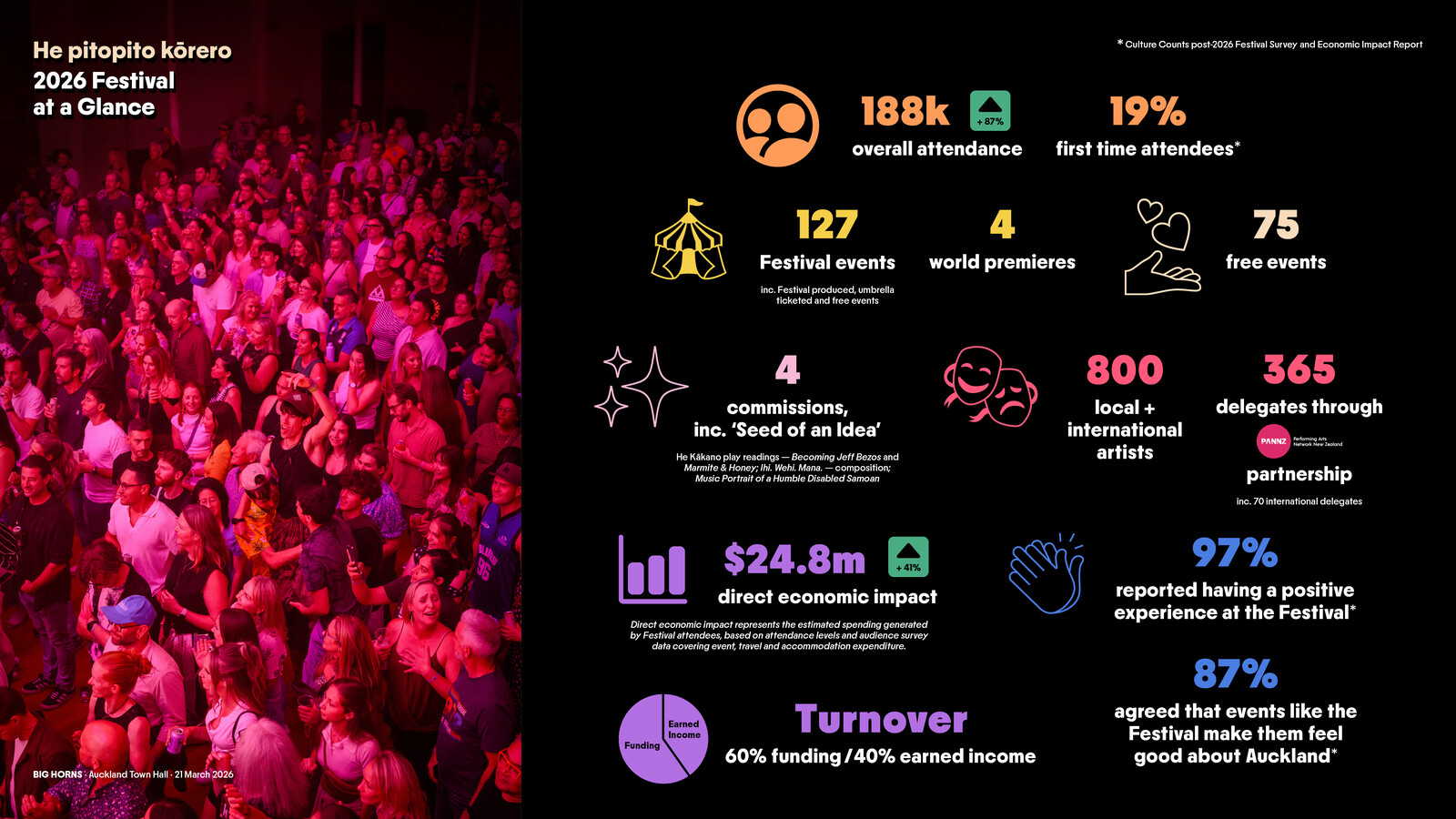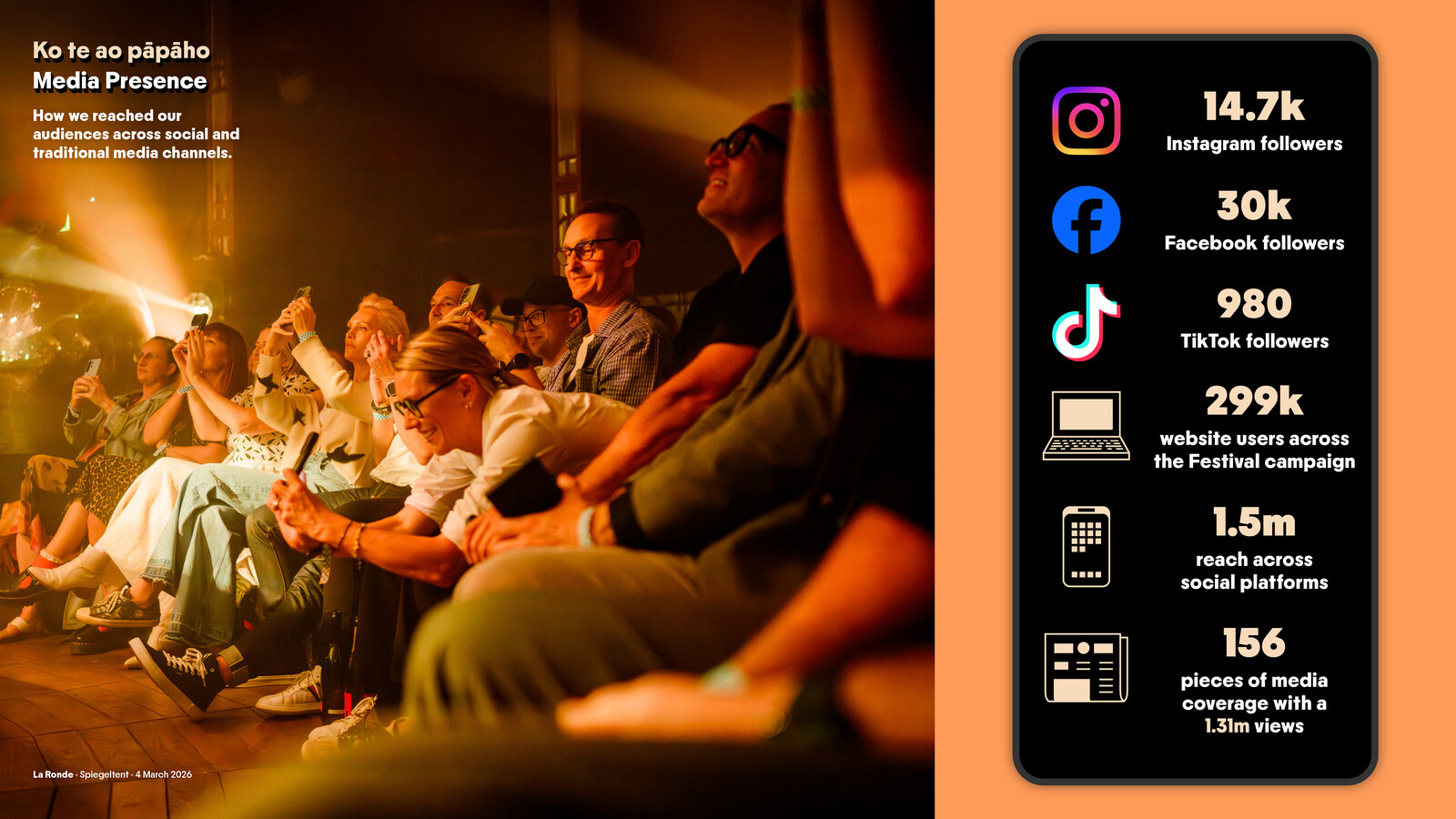
Te Ahurei Toi o Tāmaki Auckland Arts Festival recorded more than 188,000 attendances across its 2026 programme, highlighting its growing contribution to Auckland's cultural life, community wellbeing and city centre vibrancy.
Today, The Auckland Festival Trust released its 2026 Impact Report, confirming the Festival's contribution across cultural, social, community and economic outcomes.
The report highlights a significant increase in the Festival's impact from the previous year. Overall attendance increased 87% reflecting the Festival’s continued focus on creating opportunities for Aucklanders to engage with arts and culture through a mix of world-class performances, new Aotearoa work, free public experiences and community events.
Chair of The Auckland Festival Trust Sarah Judkins says
"The Festival continues to play an important role in Auckland's cultural, social and economic life. These results demonstrate the value of investing in experiences that bring people together, celebrate creativity and contribute to a vibrant and connected city."
"While attendance remains an important measure of success, the Festival's impact can also be seen in the way it supports Auckland's identity, creates opportunities for communities to participate in cultural life, contributes to city centre activity and helps make Auckland a place where people want to live, work and visit."
The Festival contributed an estimated $24.8 million to Auckland’s economy, up 41% on 2025 generating impact through visitor spending, hospitality and accommodation across the city.
A key driver of attendance growth in 2026 was the Festival's expanded free programme, supported through funding from Auckland Council Events.
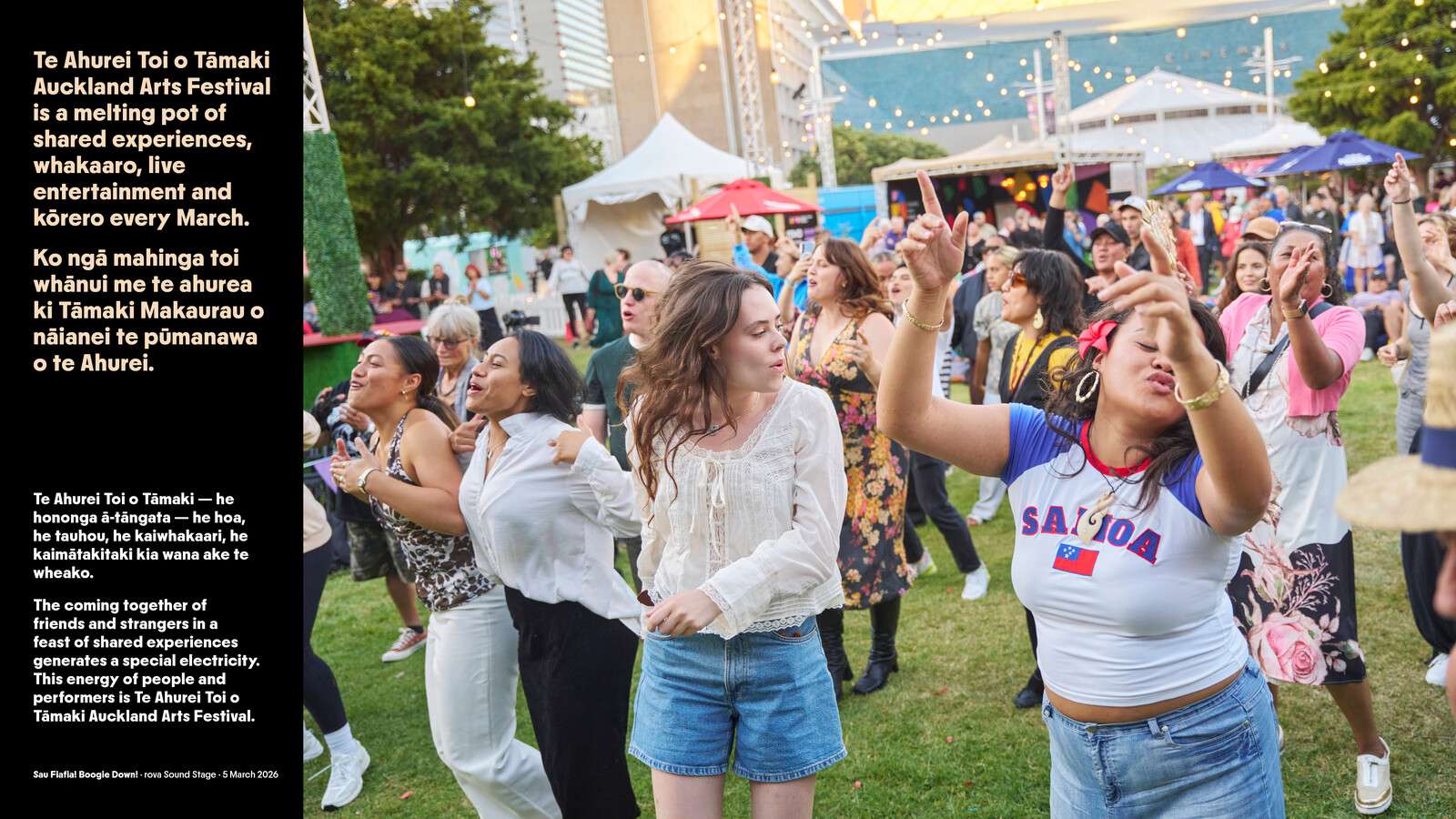
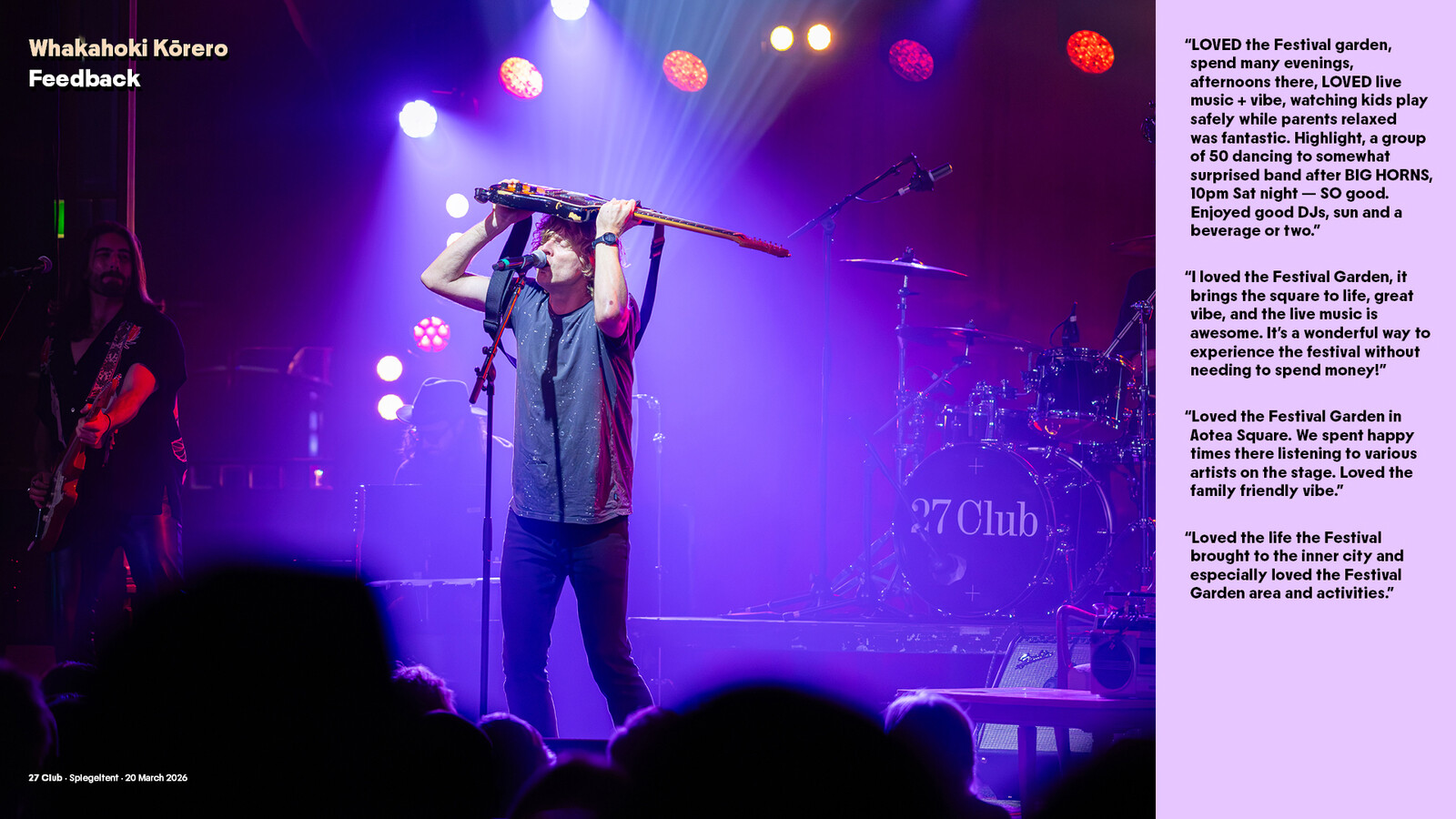
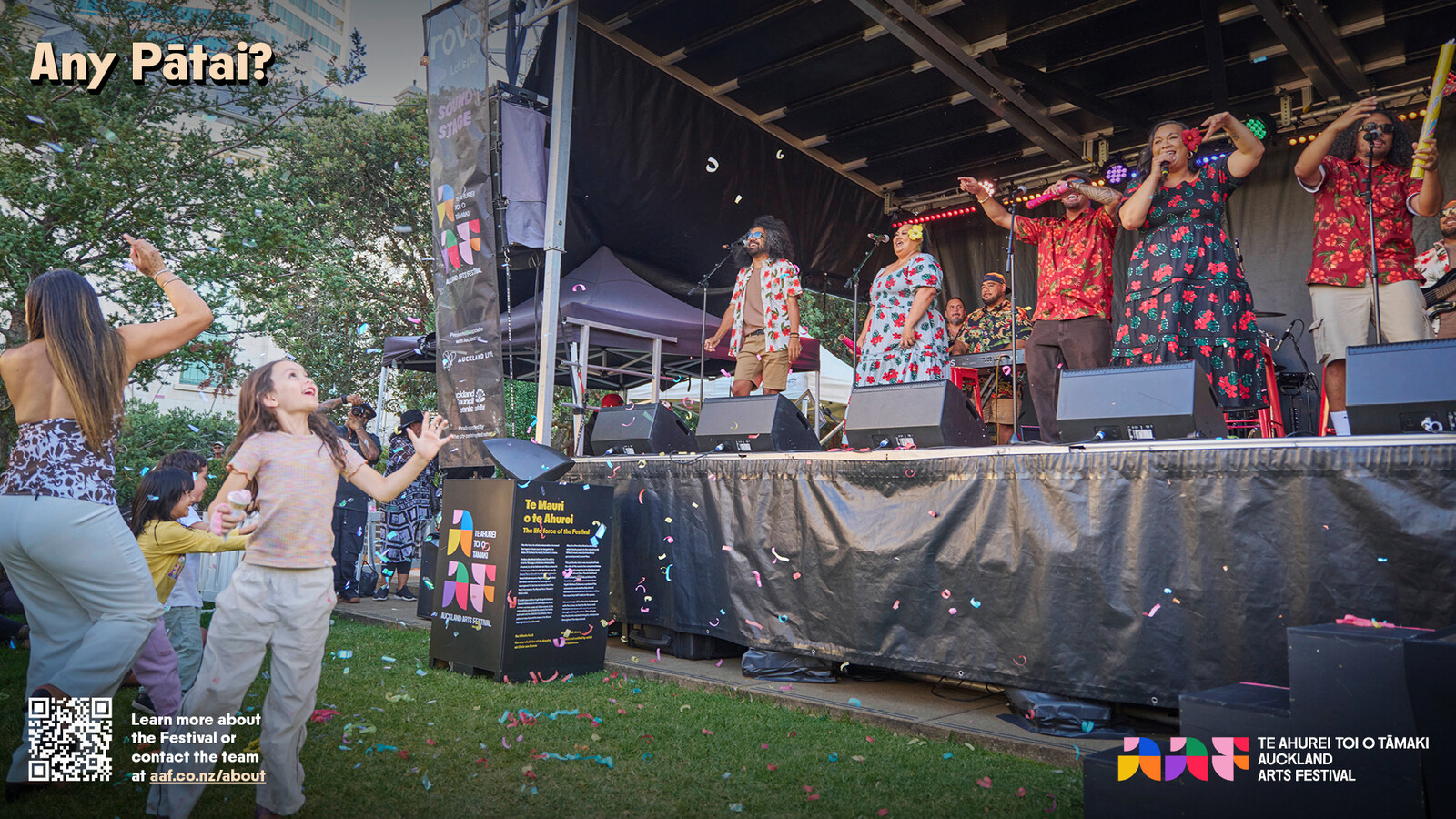
Reimagined for the 2026 Festival, the Festival Garden became a vibrant gathering place in the city centre featuring 47 free events on the rova Sound Stage including opening event Sau Fiafia! Boogie Down with Island Vibes.
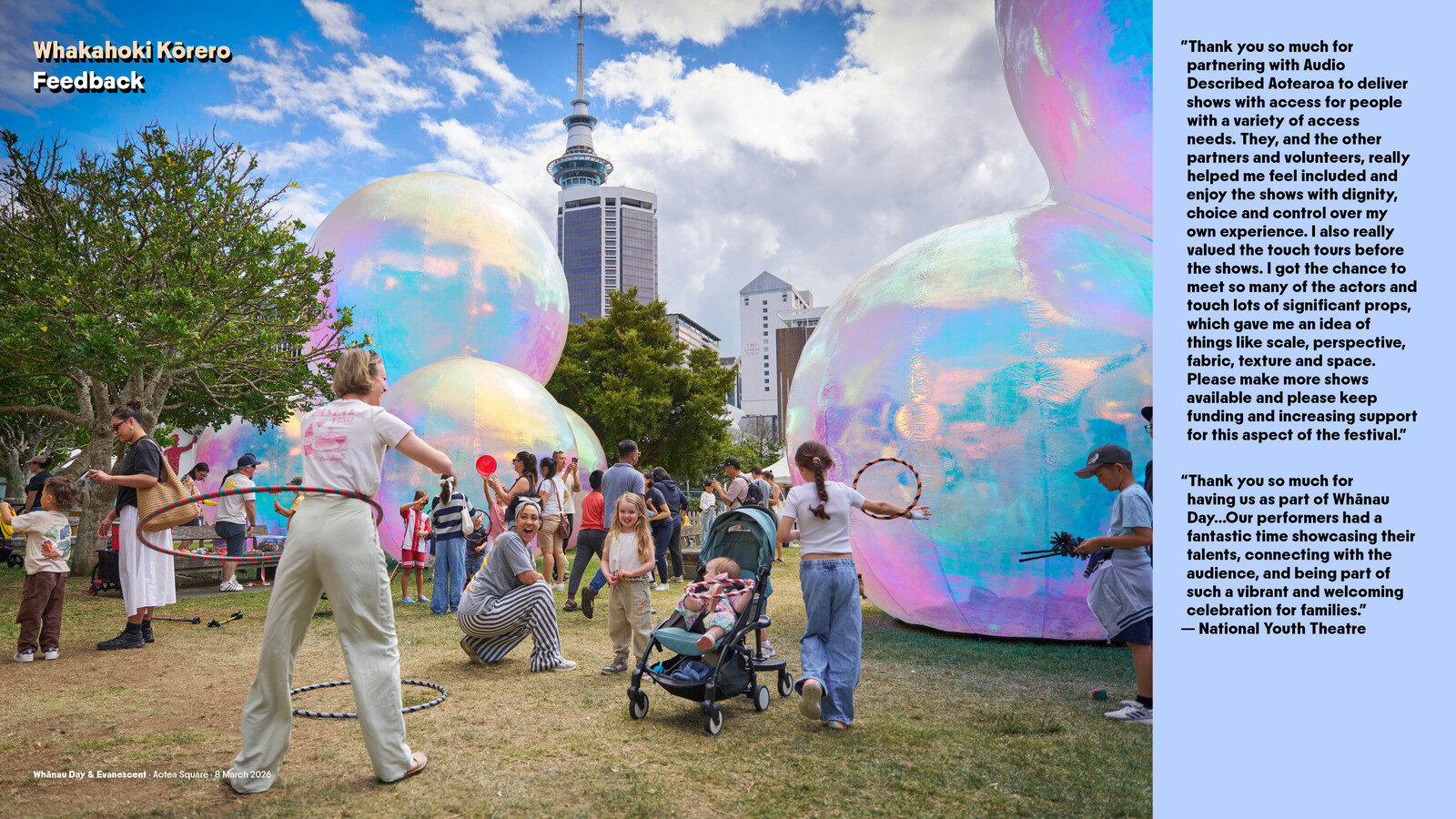
Whānau Day took over Aotea Square with performances on the rova Sound Stage, a silent disco in the Spiegeltent an art hunt in the precinct and numerous activities for tamariki to participate in. Whānau Day saw a record 4,000 attendances in one day.
Artistic Director Bernie Haldane says the Festival's success reflects a commitment to ensuring people can connect with arts and culture in ways that suit them.
"One of the most encouraging outcomes from 2026 was seeing more people participate in the Festival in different ways. Whether attending a major international performance, discovering a new, New Zealand work, gathering with friends in Aotea Square or spending time with whānau at a free event, the Festival is designed to create opportunities for connection through arts and culture."
"As we look ahead to future Festivals, we remain focused on creating experiences that are ambitious, accessible and reflective of the communities that make up Tāmaki Makaurau."
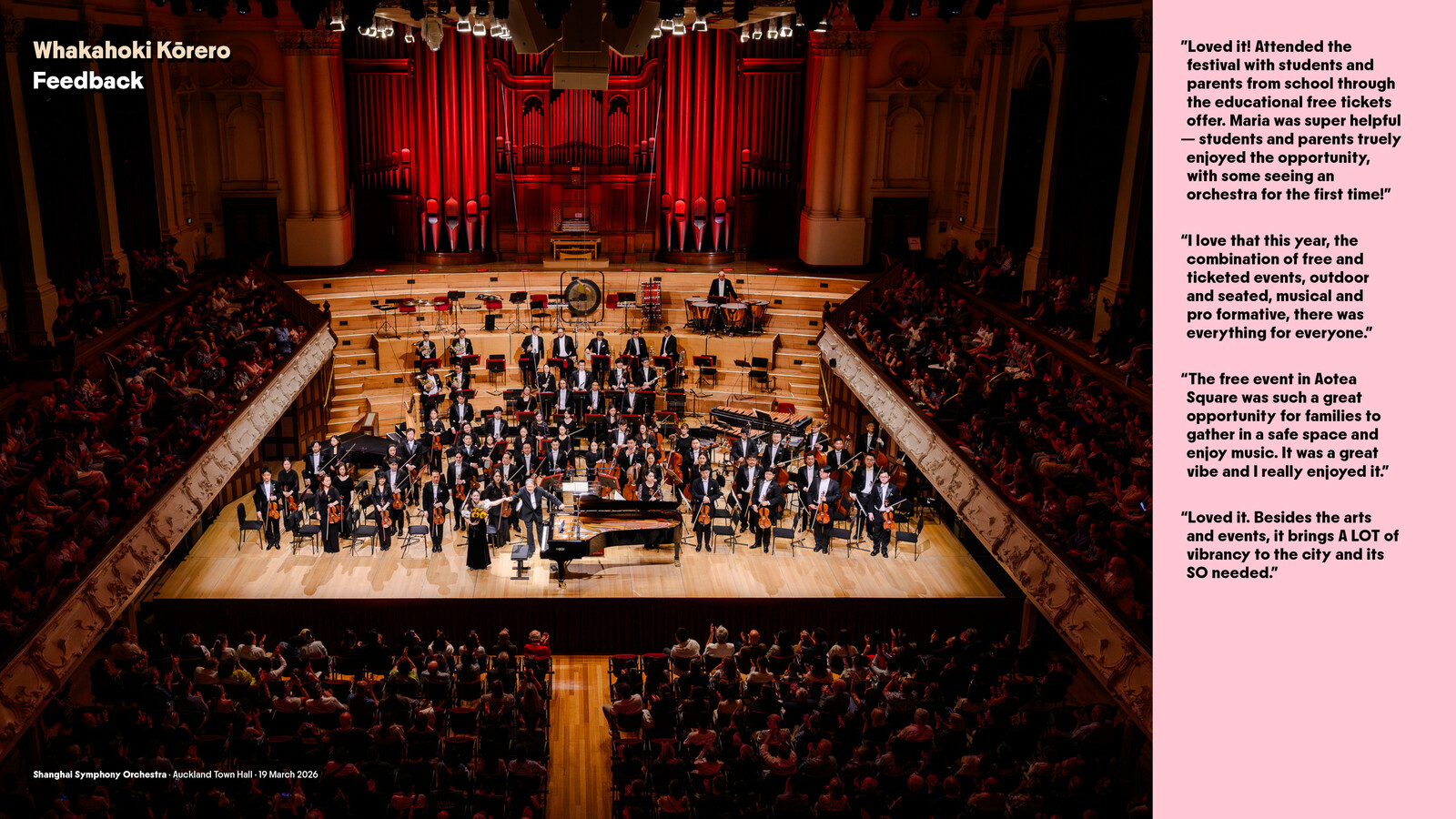
Broad audience appeal was demonstrated through sellout performances by the Shanghai Symphony Orchestra in the Auckland Town Hall and Werewolf a unique theatre experience created by contemporary Aotearoa theatre makers Binge Culture.
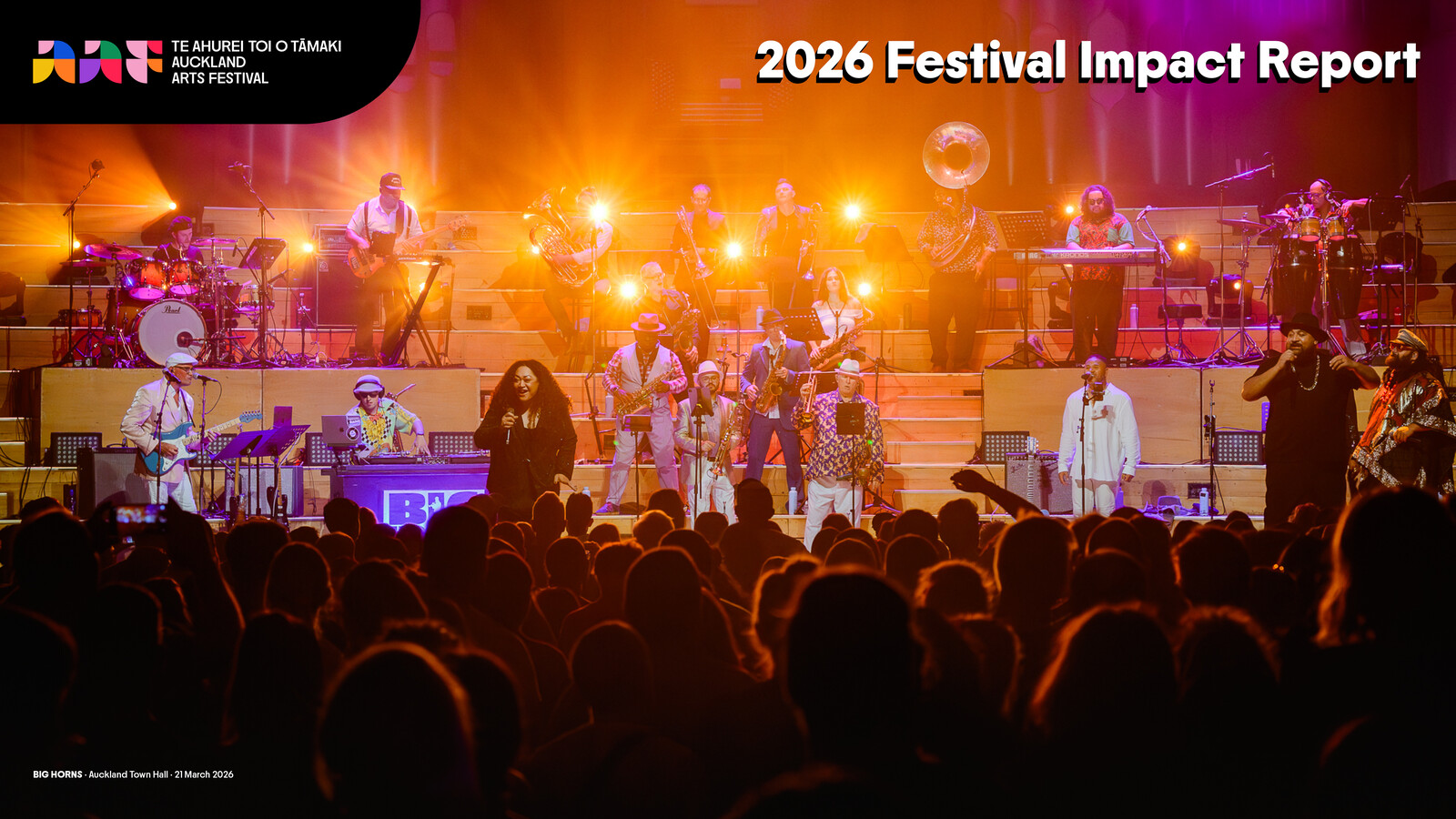
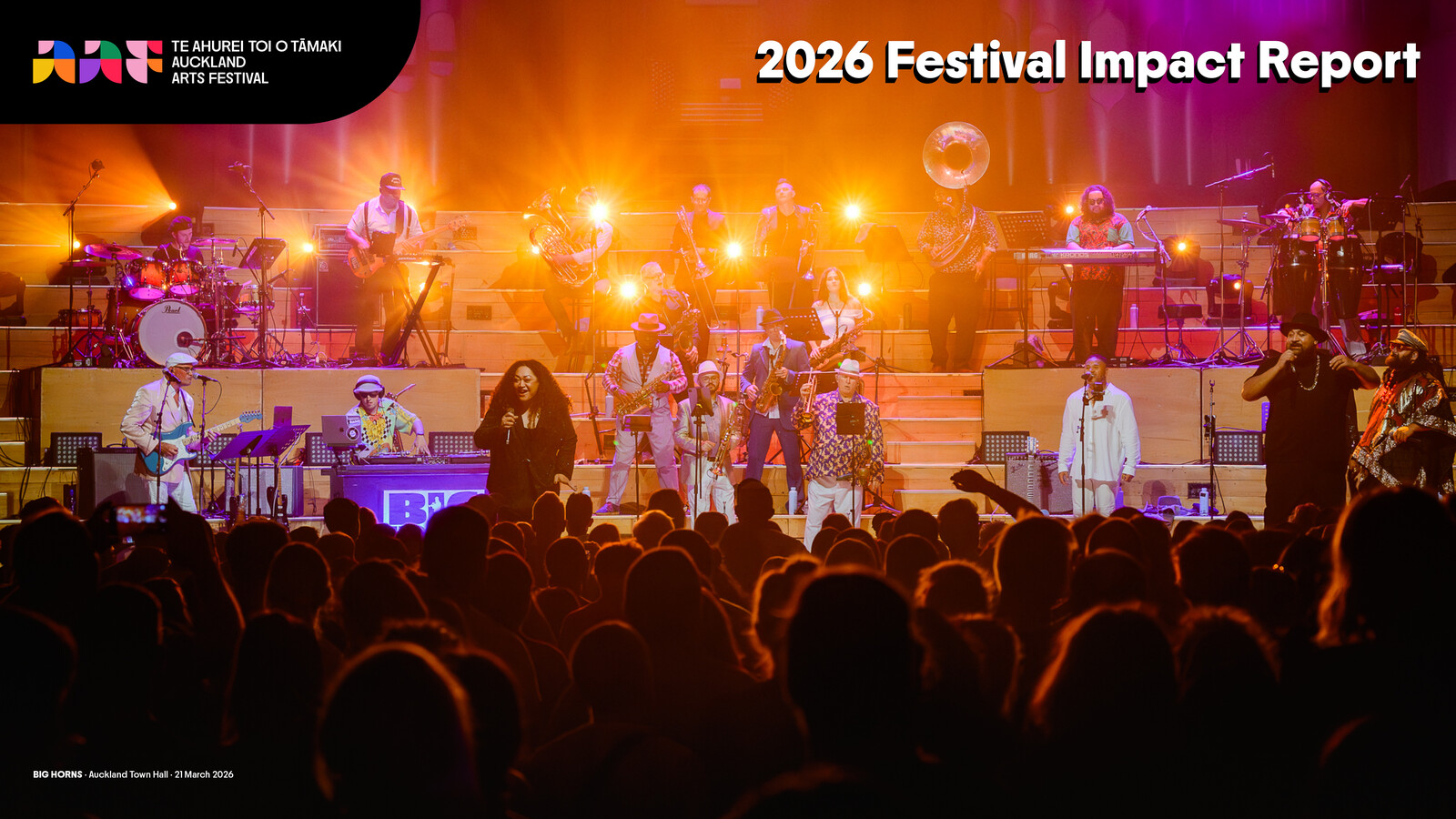
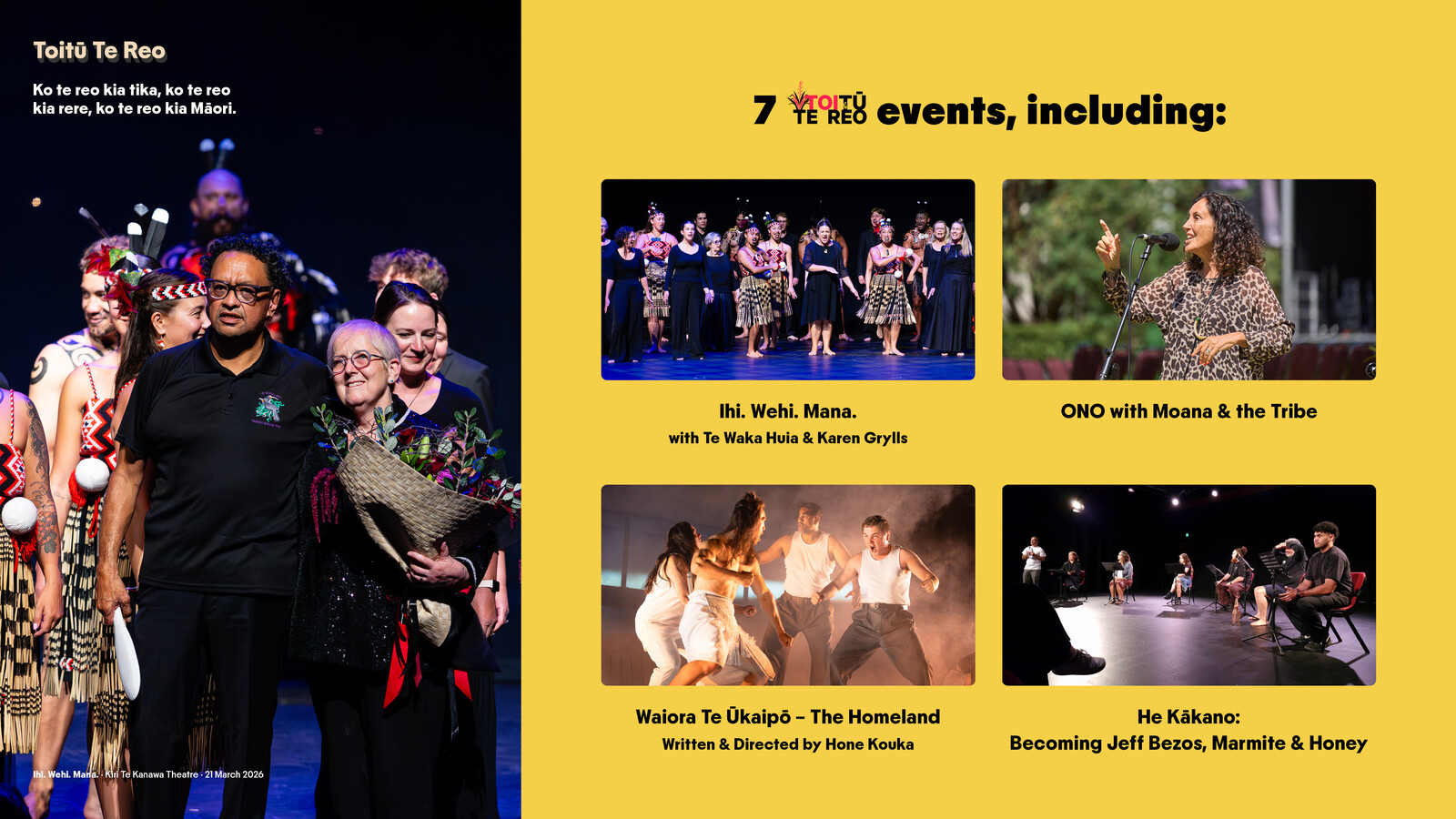
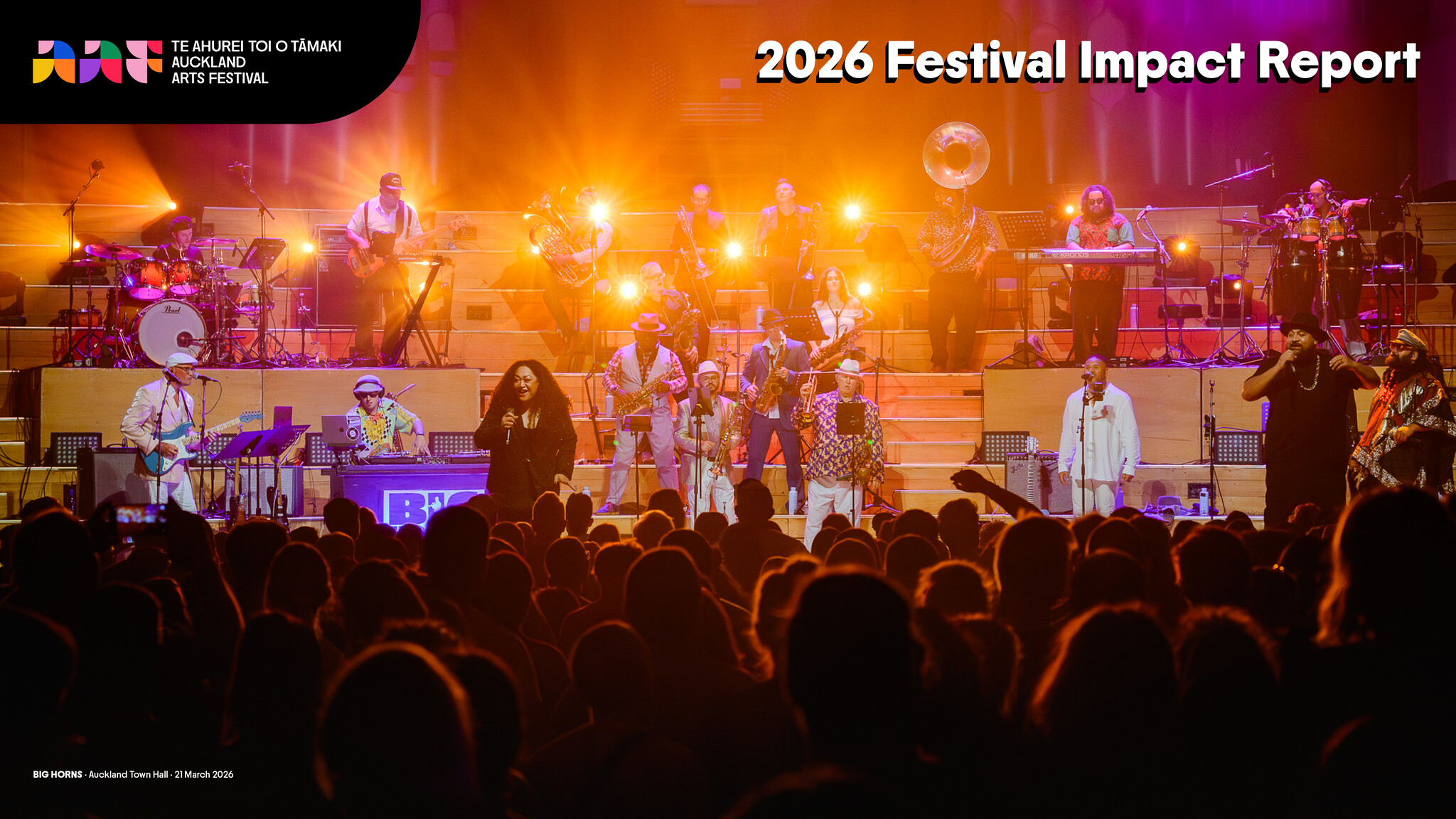
BIG HORNS, a reimagining of the big band genre with R&B soul and funk packed the Auckland Town Hall while audiences attending Ihi. Wehi. Mana. were the first to hear the Festival’s commissioned waiata of the same name composed by the late Robert Wiremu.
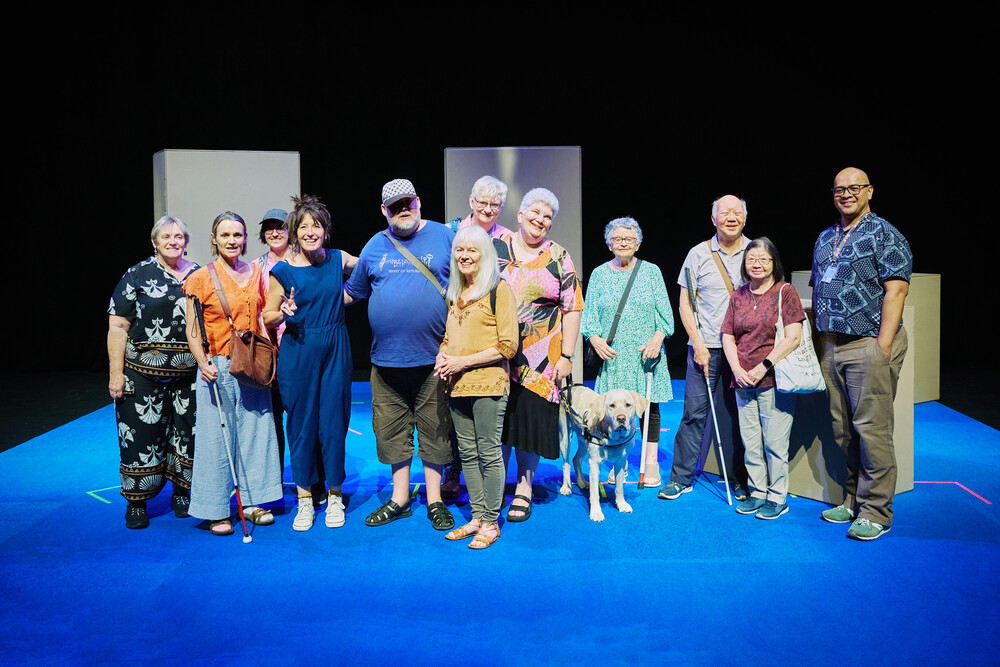
The Festival's commitment to accessibility, inclusion and participation has been recognised nationally through a nomination for Diversity, Equity and Inclusion Event of the Year at the 2026 New Zealand Event Awards.
Daniel Clarke, Tātaki Auckland Unlimited Director of Auckland Live said investing in major arts and cultural events supports their important role in promoting Auckland’s city centre and reputation.
"Arts, performance and cultural events such as the Auckland Arts Festival help bring people into the city, support local businesses and contribute to the energy and vibrancy that makes Auckland an attractive place to live and visit. The Festival builds on our reputation as a city known for exceptional arts and creative experiences. The Festival is an important part of Tāmaki Makarau Auckland's cultural calendar showcasing exceptional artistic works and creating more reasons for people to visit.”
Planning is well underway for the 2027 Auckland Arts Festival with the programme due to be released in late October 2026.
Ends
About the Festival
The Auckland Festival Trust has been the guardian of Te Ahurei Toi O Tamaki Auckland Arts Festival since 2001. Every March, the Festival proudly brings together local and international artists to celebrate creativity, culture and community across Tāmaki Makaurau.
Auckland was the first city in the Asia-Pacific region to establish a major arts festival. The original Auckland Festival ran from 1948 to 1982. The Auckland Festival Trust was established in 2001 following the Auckland City Council decision to launch a new bi-annual arts and cultural festival. In 2016, the Festival became annual and today it is one of New Zealand’s largest arts festivals, providing access to the arts for all Aucklanders and supporting visitor experiences across the city.